What Are Casino Floors Really Made Of? A Guide to Commercial Gaming-Floor Coatings
Walk from the gaming floor to the kitchen to the parking garage of a Las Vegas or Reno resort and you're standing on three or four completely different flooring systems — here's why.
It's a question that comes up a lot: what are casino floors actually made of? The honest answer is that there isn't one material or one system — a casino or resort property is really a collection of very different flooring environments stitched together under one roof, each with its own traffic pattern, spill risk, and durability requirement. Gaming floors, back-of-house kitchens, employee corridors, and parking structures each call for a different approach, and understanding that breakdown is useful whether you're a facilities manager planning a renovation or just curious what's under your feet on the Strip or in the Reno/Tahoe gaming corridor.
Gaming floors are not one material
The visible gaming floor — the area with slot machines and table games — is one of the most demanding commercial flooring environments anywhere, because it runs 24/7, sees enormous continuous foot traffic, and has to manage everything from spilled drinks to dropped chips without becoming a slip hazard or looking worn within a year. Properties use a mix of approaches here: decorative hard-surface coatings in some areas, carpet in others, and transition zones where the two meet. Where hard-surface commercial coating is used, it needs spill and stain resistance, durability under constant rolling and foot traffic, and a slip-resistant finish that doesn't sacrifice the polished, upscale look resort properties are going for.
Back-of-house corridors and employee areas
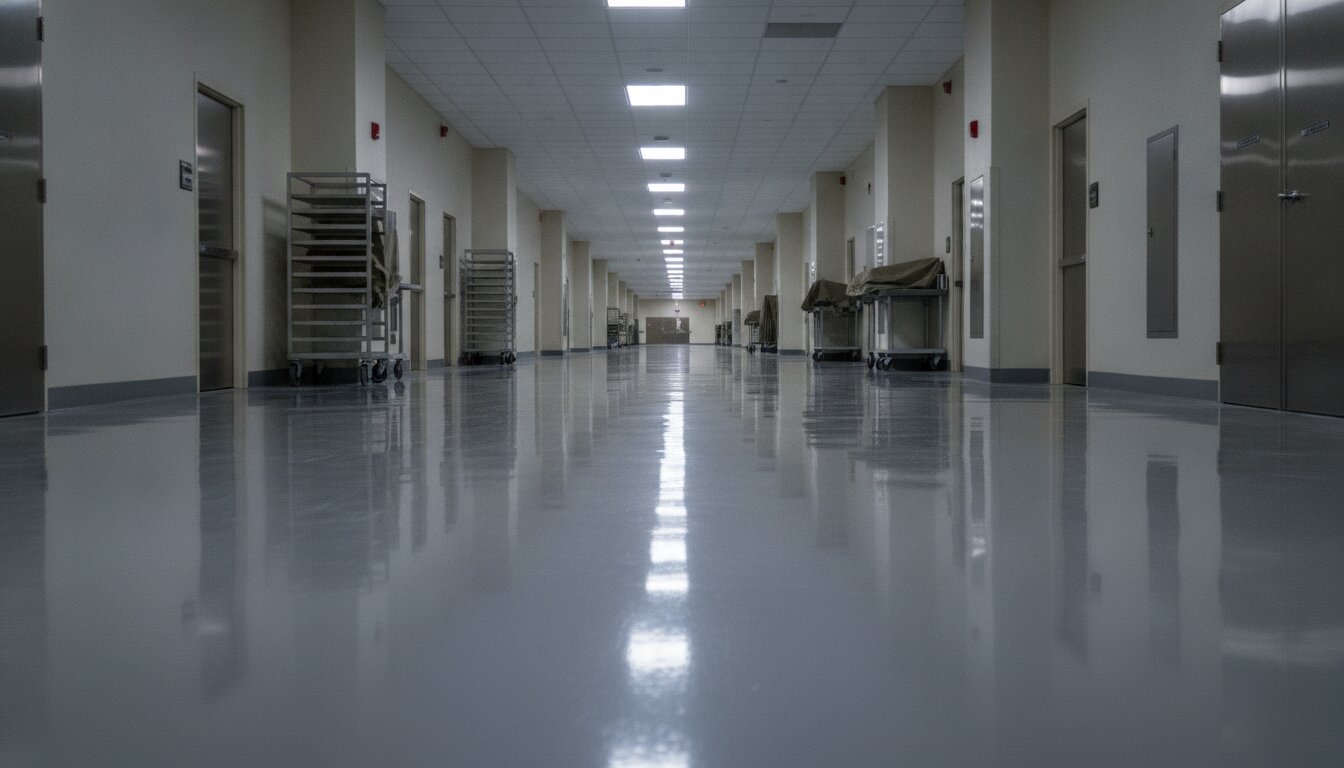
Behind the visible resort floor, a completely different set of hallways, loading areas, and employee corridors run around the clock supporting the property. These areas see heavy cart and equipment traffic, frequent cleaning, and a lot of wear that never shows up to a guest — which means the flooring specified here prioritizes abrasion resistance and low-maintenance durability over decorative finish, since these surfaces need to survive heavy daily use without constant re-coating.
Commercial kitchens: a category of their own
Every resort property runs at least one, and usually several, full-scale commercial kitchens operating continuously — and kitchen flooring has its own dedicated set of requirements around chemical resistance, heat exposure, grease, and slip resistance that differs meaningfully from both the gaming floor and back-of-house corridors. It's enough of its own topic that we cover it in detail in our guide to commercial kitchen flooring for Las Vegas and Reno resorts.
Managing flooring across a multi-zone resort property? Let's talk about a phased approach.
See our casino & resort flooring workParking structures: a different problem entirely
Hotel and casino parking structures serve enormous volumes of guest and employee vehicle traffic around the clock, and they face a set of problems that has nothing to do with gaming-floor foot traffic or kitchen chemical exposure — namely vehicle weight, tire wear, weather exposure on upper decks, and water intrusion into the structure below. That calls for a traffic-rated, moisture-vapor-barrier approach rather than a decorative or slip-resistant finish system. We cover the waterproofing side of that work in more detail on our moisture-vapor barriers page.
- Gaming floors — decorative, spill- and stain-resistant, slip-resistant finishes built for continuous 24/7 foot traffic.
- Back-of-house corridors — abrasion-resistant, low-maintenance flooring for constant cart and equipment traffic.
- Commercial kitchens — chemical-, heat-, and grease-resistant flooring built for 24/7 food-service operations.
- Parking structures — traffic-rated, moisture-vapor-barrier coatings protecting against vehicle wear and water intrusion.
Good to know
Out of the Nevada-market contractors researched for this piece, only one lists "hotels and casinos" as a target industry at all — and none currently publish a dedicated casino or resort flooring page, case study set, or messaging built around the vertical. This is a real gap in how the local trade-service market talks about resort flooring, even though the category is well established nationally.Why 24/7 operations change the installation approach
A resort property that never closes can't simply shut down a wing for a traditional, slow-curing flooring project. That's a major reason fast-cure polyurea systems are specified for casino and resort work — they're formulated to minimize the time an area is out of service, which makes phased, off-hours, or section-by-section installation realistic in a way it wouldn't be with a slower-curing system.
Slip resistance where carpet meets hard surface
Every resort property has transition zones where carpeted areas meet hard-surface flooring, and those transitions are a common trouble spot for slip hazards if the finish isn't specified correctly. Commercial coating systems for these areas need a slip-resistant profile that performs consistently at the transition, not just on the open floor field.
Quick answers
What are casino floors made of?
There isn't one single answer — casino and resort properties use different flooring systems in different areas depending on traffic, spill exposure, and slip-resistance needs. Gaming floors, back-of-house kitchens, employee corridors, and parking structures are typically specified with different systems entirely, which is why a dedicated commercial coating approach matters more than a one-size-fits-all product.
Can a casino or resort get flooring installed without shutting down?
Fast-cure polyurea systems are chosen specifically for commercial and hospitality jobs because they minimize downtime compared to slower-curing alternatives. Contact us to discuss a phased or off-hours installation plan for a property that can't fully close.
Do resort parking structures need a different coating than the gaming floor?
Yes — parking structures deal with vehicle traffic, weather exposure, and water intrusion, which calls for a moisture-vapor-barrier and traffic-rated coating approach rather than the slip-resistant, spill-focused systems used on gaming floors or in kitchens. See our moisture-vapor barriers page for more on that side of resort commercial coating work.
Planning flooring across a resort or casino property?
Contact us for a project-specific estimate on gaming-floor, back-of-house, or parking structure flooring. Call 844-967-5247 or get started online.
More from the blog
Climate & Durability
Why Epoxy Garage Floors Fail in Las Vegas Heat (And What Actually Holds Up)
Read moreClimate & Durability
Freeze-Thaw Damage Is Real in Reno: Why Northern Nevada Garages Need More Than Basic Epoxy
Read moreCasino & Resort Flooring
Commercial Kitchen Flooring for Las Vegas & Reno Resorts: What 24/7 Operations Actually Require
Read more