Commercial Kitchen Flooring for Las Vegas & Reno Resorts: What 24/7 Operations Actually Require
A resort back-of-house kitchen never really closes. Here's what that means for the flooring underneath it, and what actually needs to hold up day after day.
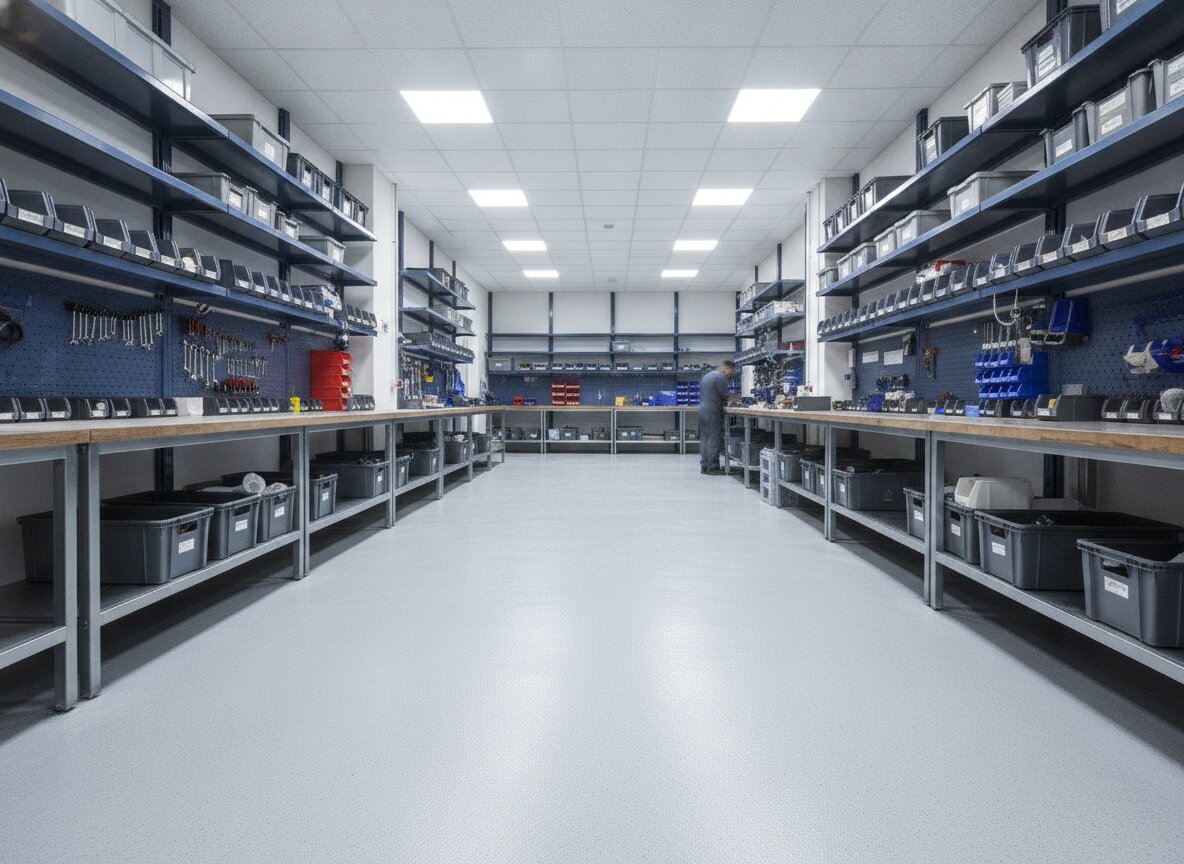
Every Las Vegas Strip and Reno-area resort runs at least one, and often several, full-scale commercial kitchens — and unlike a standalone restaurant that closes overnight, resort back-of-house kitchens frequently run close to 24/7 to support room service, staff dining, banquets, and multiple guest-facing restaurants on staggered schedules. That kind of continuous operation puts a specific, demanding set of requirements on the flooring underneath it, and it's a different conversation than flooring almost anywhere else in a resort property.
What health codes actually require
Commercial kitchen flooring in any jurisdiction is generally expected to meet a few core principles: it needs to be smooth and non-absorbent so it doesn't harbor bacteria, durable enough to withstand constant foot and cart traffic plus heavy washdown cleaning, and installed with proper drainage and coved wall transitions so there are no hard-to-clean corners or standing-water spots. Exact code language varies by county and facility type, so it's always worth confirming specific requirements with your local health authority for your kitchen — but those core principles are consistent across Nevada's jurisdictions.
The realities of a 24/7 resort kitchen
A kitchen that's constantly in use rarely gets the kind of extended downtime a standalone restaurant might have overnight for maintenance. That reality shapes both the flooring system chosen and how any installation or repair work gets scheduled — a resort kitchen manager needs a coating system that's not just durable long-term, but realistic to install or repair in sections without shutting the whole operation down.
Grease, heat, and chemical exposure
- Grease and oil. Constant cooking activity means ongoing grease exposure that can make standard flooring dangerously slick and, over time, degrade coatings not formulated to resist it.
- Heat. Areas near fryers, ranges, and dish-pit equipment see sustained elevated temperatures that a flooring system needs to tolerate without softening or degrading.
- Cleaning chemicals. Commercial kitchens are sanitized frequently with industrial-strength cleaning chemicals, which standard flooring finishes can break down under repeated exposure.
Need flooring that handles grease, heat, and constant washdown in a 24/7 kitchen?
See our chemical-resistant coatingsSlip resistance and drainage
A commercial kitchen floor that's spotless but slick is still a liability — slip resistance has to hold up even when the floor is wet, greasy, or freshly mopped, which is why texture and finish selection matter as much as chemical resistance. Proper slope and drainage design work alongside the coating itself to keep water and grease moving toward floor drains rather than pooling underfoot.
Good to know
Commercial kitchen flooring was the highest-volume search term found across the entire casino and resort flooring research for this market — a sign that facilities managers across Las Vegas and Reno are actively looking for informed guidance on this exact category, not just a generic epoxy quote.Minimizing downtime during installation
Because a resort kitchen rarely has the luxury of closing entirely, fast-cure chemical-resistant coating systems are typically specified specifically to minimize the time any section of the kitchen is out of service. A phased approach — coating one prep area or line section at a time during lower-traffic windows — is often more realistic for a working resort kitchen than a single continuous shutdown. [Contact us to discuss a phased installation plan for your specific kitchen layout and schedule].
How this connects to the rest of a resort property
Kitchen flooring is one piece of a much larger commercial flooring picture across a resort property — gaming floors, back-of-house corridors, and parking structures all have their own distinct requirements. For the full breakdown, see our guide on what casino floors are really made of.
Quick answers
What do health codes actually require from commercial kitchen flooring?
Requirements vary by jurisdiction, but commercial kitchen flooring is generally expected to be smooth, durable, non-absorbent, and easy to clean and sanitize, with proper drainage and coved transitions at walls to eliminate hard-to-clean corners. Because code specifics vary by county and facility type, always confirm exact requirements with your local health authority for your specific kitchen.
Can kitchen flooring be installed without shutting the kitchen down completely?
Fast-cure polyurea and chemical-resistant coating systems are chosen for resort kitchen work specifically because they minimize downtime — phased or off-hours installation is often realistic depending on the kitchen's layout and operating schedule. Contact us to discuss a plan for your specific facility.
Is commercial kitchen flooring different from a standard chemical-resistant coating?
Kitchen flooring is a specific application of chemical-resistant coating technology, tuned for the particular combination of grease, heat, moisture, and constant washdown a commercial kitchen sees, plus the slip-resistance and drainage details health codes require. See our chemical-resistant coatings page for the broader category this falls under.
Need flooring built for a 24/7 kitchen operation?
Contact us for a project-specific estimate on commercial kitchen flooring for your resort property. Call 844-967-5247 or get started online.
More from the blog
Climate & Durability
Why Epoxy Garage Floors Fail in Las Vegas Heat (And What Actually Holds Up)
Read moreClimate & Durability
Freeze-Thaw Damage Is Real in Reno: Why Northern Nevada Garages Need More Than Basic Epoxy
Read moreCasino & Resort Flooring
What Are Casino Floors Really Made Of? A Guide to Commercial Gaming-Floor Coatings
Read more